
Choosing a fridge / 11 min read
Choose the fridge with the whole room in mind
Connect the everyday drinks, the intended position and the exact model information before making a choice.

A beverage fridge is a choice about the room as much as the drinks. It introduces a door to open, shelves to use and an appliance to look after. Begin by describing what you want it to add to everyday life. A useful plan connects the contents you actually keep, the place you want to use and the model information that explains whether those two things belong together.
You do not need a finished kitchen renovation to make a clear comparison. A sketch, a short contents list and the exact manufacturer documents can establish a sensible starting point. Keep the attractive photograph in view, but put it beside the practical questions. That makes it easier to choose an appliance for the way your home works rather than reorganising everything around the first model you notice.
Give the fridge an ordinary job
Describe the moment you want to make easier. Perhaps you want drinks near the dining area, a place for the cans used through the week or a separate arrangement for occasional guests. Be specific about what will be stored and who will use it. A clear purpose helps you decide which questions deserve attention and which features are simply interesting possibilities.
Look at your current routine before adding capacity. Note what is usually kept cold, what remains elsewhere and how often you replenish it. The aim is a realistic picture of your household, not a display filled for a photograph. If the need occurs only occasionally, distinguish that occasion from the ordinary week. This gives your plan a useful scale before you compare cabinet sizes.
Think about the people sharing the space. Consider where they approach the fridge, where they put a drink afterward and which nearby activities continue while the door is open. A dining corner and a busy food-preparation area may raise different questions. Keep these relationships on the same sketch so the appliance becomes part of an understood room arrangement rather than an isolated object.
Separate placement from appearance
A model that resembles an under-counter unit is not automatically suitable for a cabinet opening. Danby’s installation FAQ distinguishes built-in and freestanding models and directs readers to the relevant manual. Start with the exact intended installation type, then investigate the particular model. A product label is a useful starting point, but its installation instructions contain the details you need to confirm.
Write down the location you are considering and describe it accurately. Is it an existing opening, an open position beside furniture or a planned part of new cabinetry? Note the adjacent doors, drawers and surfaces. If the arrangement depends on changing a cabinet or providing a suitable electrical connection, bring the actual model information to the appropriate qualified person before treating the position as settled.
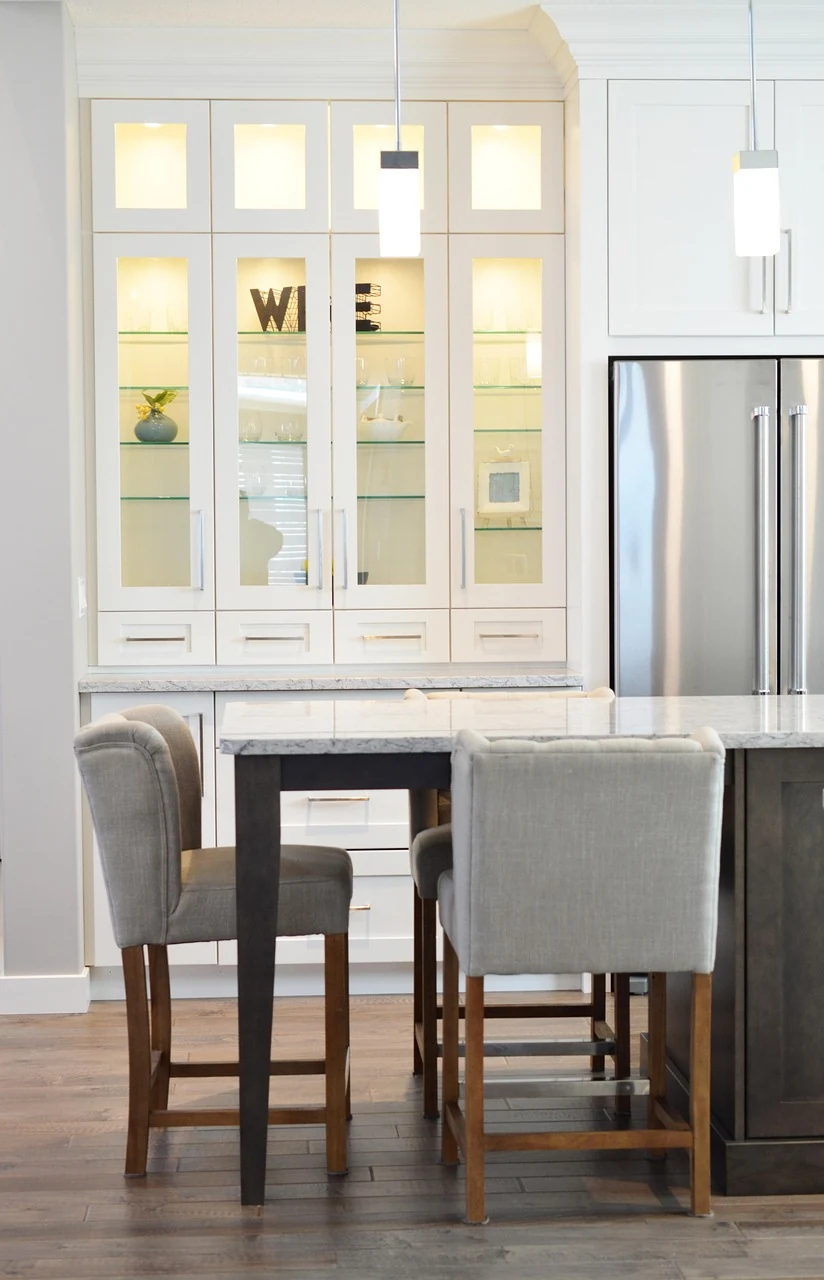
Keep visual preferences in a separate column. Glass, trim, handle shape and the relationship to neighbouring finishes all affect how the appliance looks in the room. They do not establish ventilation, installation or operating suitability. The built-in and freestanding guide helps you connect an appealing arrangement with the questions that must be answered for the actual appliance.
Read dimensions with their labels attached
Collect the drawing and installation requirements for the precise model and version. Overall appliance dimensions, internal measurements and shipping dimensions describe different things. The Danby DBC057A1BSS page, for example, lists these separately. Keep each label with its figure rather than copying an unlabeled set of numbers into your room plan.
Measure the proposed space carefully and identify any part that is still an estimate. Include the surrounding room as well as the opening itself. Ask the installer which measurements and photographs are needed to assess your intended arrangement. A simple comparison between cabinet width and appliance width may leave important questions unanswered about the door, ventilation, connections and access after installation.
Compare like with like when looking at another model. A depth figure that includes a handle is not the same description as one that excludes it. If a diagram or note is unclear, keep the question open and use the manufacturer’s support. A precise-looking number is useful only when you understand what it measures and how it relates to the installation you are planning.
Plan for opening the door and using the shelves
Think about the appliance in use rather than only with its door closed. The DBC057A1BSS manual discusses the enclosure and the door opening needed for shelf access on that model. That is a useful reminder to review the full operating space with your installer. Use the relevant drawing and instructions for the unit you choose, rather than transferring one model’s allowance to another.
On your room sketch, show nearby cabinet doors, drawers and the route people take through the area. Consider where you will stand while selecting a drink and where you will place items while replenishing the shelves. These ordinary actions can reveal an awkward relationship that a closed-door product photograph does not show. Keep the everyday use of the room part of the assessment.
Ask how the intended layout will support care and service access. The answer belongs to the actual appliance and installation, so keep it with the rest of the plan. Do not assume a tightly fitted appearance means every practical question has been resolved. An arrangement should be understandable when the appliance needs attention as well as when the room is ready for visitors.
Compare your drinks with the stated capacity
Make a short list of the container shapes you expect to store. A mix of cans, small bottles and taller bottles may use the interior differently from a single repeated container. Keep the ordinary mix separate from a special-occasion list. This helps you compare useful space for your routine instead of choosing solely from the largest capacity number on a product page.
Read how the manufacturer expresses capacity and look for a loading diagram or explanation. Note the container size and shelf arrangement associated with the figure. A stated can count is not automatically a count of any bottle you happen to use. Keep the manufacturer’s description intact when comparing two models, so the difference in the figures does not hide a difference in the assumptions.
Think about access as well as quantity. You may prefer to see several options at once or keep everyday items easy to reach. A tightly packed arrangement can be different from the one you want to use throughout the week. The shelves and capacity guide turns the contents list into practical questions about shelf positions, container shapes and the manufacturer’s loading information.
| Question | Your home | Exact model evidence |
|---|---|---|
| What belongs inside? | Ordinary container mix and replenishment routine | Capacity basis and loading information |
| Where will it sit? | Opening or freestanding position with adjacent furniture | Approved installation type and requirements |
| How will it open? | Door, drawer and walking-space relationships | Door swing and shelf-access instructions |
| How will it arrive? | Building access and the route to the room | Seller delivery scope and package information |
| How will you keep it? | Access to care information and service | Correct manual and responsible support route |
Use a small number of real scenarios
Picture a normal weekday. You open the fridge, choose something and close it again while the rest of the room remains in use. Decide what should be easy to reach and how the appliance relates to the surface or table nearby. You are testing the usefulness of the proposed position, not trying to recreate a showroom arrangement in every detail.
Then imagine replenishing it after a shop. Consider where the containers will wait while you organise them and how you will follow the loading guidance for the model. Include the packaging that needs to be put away afterward. This may change how you think about the surrounding counter or floor area, even when the appliance itself appears to fit neatly into the plan.
Finally, consider an occasional gathering if that is part of the purpose. Decide which additional drinks you would actually keep in the appliance and how they differ from your usual selection. Keep that scenario separate from the everyday arrangement. It helps you avoid letting a rare event dictate every part of the decision, while still giving you a clear way to discuss extra capacity if it matters.
Read the controls through the manual
Look at what the manufacturer says the controls and display do on the exact model. A photograph may show illuminated numbers without explaining whether they represent a setting or a measured condition. Keep the manual’s explanation beside the feature description. If an indicator, lock or mode is important to your routine, make sure you can find the relevant instructions before choosing on appearance alone.
Use the appliance’s intended purpose and the storage instructions for the contents you plan to keep. If those requirements are unclear, ask the responsible manufacturer or supplier rather than assuming every small fridge serves the same purpose. Keep model-specific operating information with the appliance. A general comparison page is a starting point for finding that information, while the actual product documentation explains its use.
Consider whether the controls will be easy for the intended users to find and understand in the chosen position. Look at the relationship between the door, lighting and display as it is documented for the model. Avoid assigning a benefit to a feature simply because its name sounds useful. Tie it to a real part of your routine and to information you can verify.
Include delivery and installation in the plan
Ask the actual seller what delivery includes and what you need to prepare. Keep the route into the home separate from the final installation position. Doorways, turns and building arrangements may need a specific assessment by the responsible provider. Product dimensions alone do not establish how a packaged appliance will be brought into place or what work the delivery service will undertake.
Keep any installation work clearly assigned. The appliance documentation, the room and the scope of the service all need to agree. If cabinetry, electrical arrangements or another part of the property needs attention, use an appropriately qualified professional. Record the agreed responsibilities before the delivery day so a practical question is not left to whoever happens to be present when the appliance arrives.
Save the current offer, exact model reference and service arrangement together. Include any conditions that matter to the purchase, and check them with the seller before deciding. This makes a comparison more complete than a single headline amount. You can see the item, the relevant arrangements and the remaining questions as one decision rather than several disconnected tasks.
Make care information easy to find
Find the correct manual while you are still comparing options. GE’s GVS04BQNSS owner page groups support around that model and links its manual. Use the same approach for whichever appliance you choose: begin with the complete model reference and the maker’s own resource, then confirm the document covers the version you have.
Read the care and ownership sections to understand what information you will need later. Different materials, shelves and controls can have different instructions. Keep the manual accessible and follow its safety information in full. If something is unclear or appears damaged, use the responsible manufacturer or appropriate service professional instead of improvising a treatment or repair.
Keep a concise appliance note with the model, manual link, purchase documents and verified support route. You can store private serial and order details separately from any general room-planning notes you share. The manual and ownership guide helps organise that information so it remains useful after the initial choice.
- Before choosing
- Describe the everyday purpose and actual contents.
- Match the intended position to the exact model documentation.
- List unresolved measurements and installation questions.
- Before delivery
- Confirm the provider’s scope and access requirements.
- Keep the agreed installation responsibilities together.
- Have the correct manual available.
- For everyday ownership
- Use the model-specific operating and care guidance.
- Keep the manual and support reference easy to find.
- Recheck the plan if the appliance or room arrangement changes.
Keep the version and the question together
When a product family includes several versions, keep the complete model reference attached to every note. A finish name, door arrangement or control description may be part of a particular version rather than the whole range. Compare the actual option you would choose, and ask the seller to identify it clearly in the offer. This reduces the chance that a useful answer becomes detached from the item it describes.
If someone else joins the decision, share the short brief rather than an unstructured collection of saved products. Show the intended place, the ordinary contents and the few questions that remain open. Invite them to consider the daily routine as well as the appearance. You can then update the same comparison instead of starting a second, conflicting list of assumptions about what the appliance should do.
Choose the arrangement you can explain
Return to the original purpose once the technical and practical questions are clearer. Compare a small shortlist using the same contents list, room plan and service assumptions. Keep required features separate from preferences. An option can be visually appealing yet leave an essential question open; another may make better sense of the space you already use. Let the complete comparison guide the decision.
Give each remaining question a specific next step. You might need the maker to clarify a drawing, the installer to assess a position or the seller to explain a delivery condition. Keep the answer with the relevant model. This makes it easier to pause, consider another option or involve someone else without losing track of what has actually been confirmed.
The most useful final plan is simple: the appliance, its place, the contents it is intended to hold and the information needed to use and look after it. Keep those parts connected. A beverage fridge can then become a considered part of the room, with a clear purpose in everyday life and a practical arrangement behind its appearance.